Fexibility...

Fexibility...
Using my flexibility will help my dance flow better and will help in deepening my movements.

Saturday, 19 November 2011

Bartenieff Fundamentals: Upper Lower Continued...

We began today improvising with the pelvis and seeing how much it can move through the space. We then explored this same task with a partner holding the other persons' waist so that we could feel the ranges of movement and try to prevent the movement so that the opposite person explores as much as possible. Here you could also feel the large, flat bone of the girdle.


http://anthropologynet.files.wordpress.com/2008/10/female-pelvis.jpg
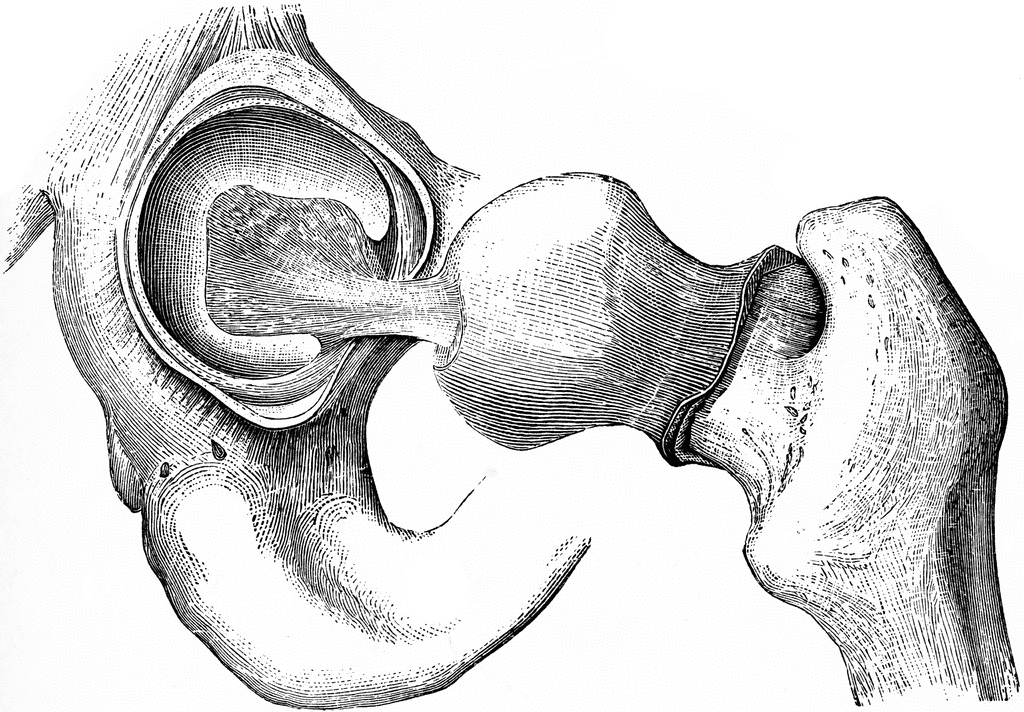
We then began to look at the pelvic structure on a skeleton and we were able to see where the femur connects to the hip joint. The Articular cartilage (femoral head) at the very top of the femur slots into the hip bone to give a range of circular movement called a ball and socket joint. You can see in the picture on the right, that the femoral head is a ball-like bone that sits into the Ilium, Ischium and Pubis. The ligamentum teres attaches these two bones together which the interruption of the synovial membrane and cartilage, to prevent rubbing and irritation of the two sets of bone. We also looked at the femur, especially the knobbly part at the top of this bone. This is called the greater trochanter and inside of the femur is the lesser trochanter. This is where the major muscles attach to the hip. This is more prominent when you actually feel your own body's hips as it sticks out from the rest of the thigh and hip.
http://etc.usf.edu/clipart/50600/50671/50671_hip_joint_lg.gif

The hip joint is a synovial joint between this and the head of the femur. Flexion, extension, adduction (adding to body; across), abduction (taking away from the body; leg away), medial and lateral rotation and circumduction occurs here. This helps to create a range of movement at and around the hip. Occasionally people don't use this range of movement fully and then it seizes up, therefore they have to compensate with the lower spine (T10- L5).

We placed dots on the most important parts of our pelvis which included:
  • Iliac crest.
  • Hip joint/Acetabulum.
  • Greater trocanter.
  • Sitz bones.
With these parts of the body highlighted, it enhanced the movement of them because I breathed into these parts to help them relax and move.

I then laid on my back and placed my feet underneath my sitz bones about an inch apart from each other. Here I began to press and resist into one foot and raise the other leg using the crease of the hip joint and not the use of the gluteals. The act of this is "pushing through the earth" or grounding into the floor through the use of energy through the psoas line and out of the head. This is femoral flexion and lengthening of the spinal column. Peggy Hackney talks about thinking of the hip joint moving through a 'U' shape so that it creates an open space in the joint and there is no congestion. Lengthening out of this will help to create a bigger space between the spine, pelvis and femur and will help to release any tension in the outer leg and back.

Begin engaging the hamstrings towards the sitzbones to return to normal 'standing' position with the feet.

In Peggy Hackneys book 'Making Connections' she mentions the theory of Irmgard Bartenieff and "The Dead Seven Inches". This is important when mobilizing certain parts of the hip joint. This comes from the placement of the thumbs below the hip bones, whilst reaching down with the middle fingers to include the greater trochanter. Letting the thumbs and fingers sweep around the pelvic basin, a wide band of approximately seven-nine inches wide occurs.

We furthered our exploring with lying flat again, relaxing into the floor with our knees up and feet 'standing' again. We explored the sagittal weight shift by resisting and pressing into the floor through the feet, releasing the pelvis off of the floor (leaving an inch gap). I thought about the knees growing long, outwards but relaxing my gluteous maximus and psoas muscle. I would then think about what is connecting with the floor and then distribute the weight between the heels and toes. The connections are between the heels and sitzbones and the ball of the feet and psoas, here you can feel how grounded the feet are in these positions and how the muscles are working. Releasing back to the floor, you decrease the femoral joint and and drop the pelvis down, directly to the floor - REMEMBER DO NOT ROLL DOWN THE SPINE!

Now repeat the releasing of the pelvis from the floor and explore the various ways in which I can move my pelvis. This includes a side to side action (no dipping in the hip joints; as if a pole is going straight through the hip joints), a forward and backward action (shifting weight as above) and a circular motion. Using the breath helped my to centre myself and I could feel myself breathing into certain joints and muscles helping to increase the energy into the movement. Then release the pelvis as stated above.

I have tried some of the shifts in the pelvis as stated in Peggy Hackney's book; Sagittal Propulsion - sitting. I began sitting upright with the weight of my pelvis down into the floor and my feet grounded in parallel position (the arms a down beside the pelvis). Begin yielding and pushing into the floor with my feet and hands to release my pelvis off of the floor shifting my weight forward towards my feet. I could feel the connection between my feet and the floor, my tail reaching to the floor and my heels pressing towards the floor; here you can still sense being grounded. Once I felt this connection I would reverse the action by creasing the femoral joint, using as little muscles as possible.

I then thought about what we had just being doing (the process) and also how the joint move in these explorations, and I applied this to my next phrase. We began with the roll down sequence we do every week as you feel grounded and you can apply the yield and push actions.

I begin by rolling down the spine yielding into the floor until the plie (heels reaching the ground), I then push out of the feet/heels to repositioning on hands and knees. I really try to push forward into this because this was one of my corrections from last weeks lesson. I then release the hips, creasing at the femoral joint, the let the leg go and pull me around to lying onto my back, in an 'X' shape. Here I can feel grounded whilst registering my core-distal action through my limbs. When rolling the head from side to side I could feel the 'reach' and 'pull' action through the top half of my body; opening the rib cage, spinal column, scapular and clavicle. This initiated the rolling to foetal position as the hand pulled the head and body round, and I began reaching and pulling with the hips. The next rolling section was very grounded and relaxed. Here I can feel the limbs reaching out away from the body but still with a sense of connection. I repeat all of this same feeling all the way through with corrections from last week.


Moving onto the next sequence, we performed a rolling phrase, which includes varied focus and the use of the hips and spine. I think about the head-tail connection throughout this whole sequence as it is very important when moving whilst altering the body's shape. Using breath helps to deepen the movement and centre the pelvis towards the ground. Whatever movement I perform in this sequence the pelvis is always heavy towards the floor due to gravity; using gravity to help the movement to be weighty will give a strong impact to my dancing. I tried a different version of this sequence by initiating the movement from my hips/pelvic girdle, to see if I could feel the various ways in which I can move this specific part of my body. I didn't realise how mobile my pelvis is until today as I have never taken this part of my body into consideration before; I have noticed it but not analysed it deeply.

A few mistakes I make within this phrase are:
  • Relaxing and crossing in the hip joint at the very beginning.
  • Reaching past my maximum when stretching outwards, using my core-distal.
  • Releasing the head when moving out of this position so that there so a curve in my spine.
  • Trying to leave the head behind to give a sense of twist in the spine when rolling to the other side
When performed the next sequence where we travelled across the room thinking about all of the sections that we have done previously, whilst taking into consideration the movement in the hip joints.


Here I began the sequence with 'gating'. This is where the leg is in parallel and it opens through a sidewards action with the hip joint; no other movement is needed in this action. I concentrated on how the hips could increase my plie's, side to side actions and twists, seeing if they could crease through the use of the joint itself and not the muscles around it.

Wednesday, 16 November 2011

Improvisation (what I think, feel & perceive).

I can't grasp the concept behind improvising, as it doesn't come naturally to me. When I improvise I feel like my body won't move through exciting and interesting positions. This lowers my self-esteem and I feel like I can't perform well.

When I get set certain tasks I can feel my body and mind relax into the movement. My body then goes through a number of movement patterns and new material arises. But I feel that I wouldn't use this kind of movement in my choreography; this strategy therefore doesn't work for me.

Here are a few quotes that have helped to improve my thinking towards improvisation.

"Lie resting,
Let the floor be like warm sand, soft opening to your body,
See the imprint of your body in the sand, slowly rolling over different surfaces, leaving a map of different landscapes of your body, the most familiar, the unreachable.
Let the floor listen to the messages the body leaves to itself,
The air listens to the body, inside and outside."
M.Tufnell & C. Crickway. 'Space, Body, Image'. Pg. 51. (2006) Dance Books Ltd, Hampshire.

Conversations In The Body:
"Begin listening eyes closed,
listen to the movement of the body/air
a still dance
Let one part of the body come to your attention
a hand
a foot
Let its 'voice' emerge in movement
allow the rest of the body to float/follow
Listen to the voices of the fingers/toes
where they want to go
Offer support from the rest of the body
hand wrist elbow shoulder whole body
Allow these other parts some voice too
accepting 'diagreements' if necessary
Enjoy a dialogue between parts of the body and its surroundings."
M.Tufnell & C. Crickway. 'Space, Body, Image'. Pg. 63. (2006) Dance Books Ltd, Hampshire.

There is a quote in this book that might explain what happens to me when I improvise and get stuck on what I am doing this for. Why am I doing this? What relevance does this have to me? This quote is taken from another book called Taking no for an answer by Nancy Stark Smith. Here it states; "Where are you when you don't know where you are is one of the most precious spots offered by improvisation. It is a place from which more directions are possible than anywhere else. I call this place the Gap. The more I improvise, the more I'm convinced that it is through the medium of these gaps - this momentary suspension of reference point - that comes the unexpected and much sought after 'origional' material. It's 'origional' because its origion is the current moment and because it comes from outside our usual frame of reference."

This tells me that the more creative moments come out of improvising as you 'go with the flow' and not bother about what shapes are made. I am going to use this tactic when recording for my choreography, so that when I play it back I can see what parts look good and what don't. Sometimes you can feel like your movement material feels horrible and not worth doing, but for the outside view it may look aesthetically pleasing; or vice versa. I usually choreograph looking in the mirror to see if it is worth keeping or not, but this is a poor attitude to have due to movement being different from other people's movement.

On the other hand, I do believe that you should enjoy the movement through improvising and learning to choreograph along the way. This a process of learning the movement patterns but also experiencing the learning curve of choreographing through your improvisational movements. This often includes integrating with someone else during your movement; whether it's someone in the room, someone/place that you have in mind or someone you will eventually teach this material to.

Improvisation, I feel, is something for yourself; self involvement. This is something that comes from a feeling deep within yourself, something your trying to express, or an energy. Perhaps the environment can effect the state of mind or body when exploring movement; whether this is good or bad. The outcome my change to the next time you explore material, allowing the movement to then take control and have a "life of it's own". I feel sometimes I am in a creative state and therefore I may be more spontaneous with my bodily patterns.


Improvising: following breath.
Begin standing or lying down, deepening into your breath. Here you can feel the beginning, middle and end of your breath and the effects that it has on your body (expanding the ribcage). Here you can feel the beginning process of the body's natural movement. This could be the starting point of excellent creative material with the use of just our normal, every day patterns from the body.

Now feeling the body's movements, pick a body part (one of the 6 limbs) and breathe into that area, then change to another body part. When breathing heavily and deeply, how does the body feel? What are the outcomes? How does these body parts react?

If standing, bring the breathing into the feet and start to let them take you on a journey around the space. If lying down, breathe into the core centre and let it initiate the journey through the space also.

Now begin to inhale deeply, taking in your maximum intake of air and then blow it all out (still with maximum exhale) with an 'AHHH!'. This will help to relax the body into the movement and you can feel the body's changes through the space; this may exaggerate some movements, but others may not be as pronounced.

I feel that the use of breath really helps to get creative within your own body and helps to control your mental state whilst improvising, letting out emotions and feelings.

I have been reading in the book of 'The Intimate Act of Choreography' by Lynne Anne Blom & L. Tarin Chaplin and there are some interesting points on improvisation. On pages 27 & 28 it explains the high point. This includes the well known models diagrammed by Doris Humphrey.


As you can see this begins very fast and gradually dies out, to as slow as possible (The high point starts high).
This label starts off slow and gradually increases (the high point finishes high).
Here the phrase begins and increases to the high point, but decreases again (the high point is middle).
This movement is created by the initial high point, but doesn't die out completely as it regains momentum due to certain strengths (the high points are both starting and finishing the movement); this phrase is a combination of the first two.

This theory only applies to short phrases. These can be based on either a breath or an impulse motivation.

Monday, 14 November 2011

Release Technique with Mona


Today we began the lesson with a recap on what we did last time, trying to think about the ways in which the body moves. Performing with detail helps to improve and encourage the movement to become natural.

Today I was aching a lot as I participated in an Aerial Workshop yesturday, this brought attention to my muscles as I could feel what muscles were in use when executing certain movements. I tried my hardest to push through the pain barrier as I have to improve my technique. This was a nice experience as I know that my body has worked.

When performing one of the sequences, I could feel this pain throughout as it included rolling the shoulders and spiraling the spine, this effected my deltoid, lats, trapezius and triceps and biceps. Here is a video of my trying to push through this.


In this video you can see that I am struggling a little bit with moving my shoulders with ease, but I am continuing the movement. I could do with using my spiral more throughout the sequence and linking my legs when doing plies with the upper half. I compensated my arms for my wide lunges to help portray the performance side to the sequence.
Here you can see that I am 'in the moment' of moving the shoulders. You can see that I am attempting to twist the spine into a spiral from the initiation of my shoulders. My neck and head follow after this movement. I am in plie to help start the movement of the spiral.

Here I have finished the spirals and I am bent in plie with a flat back (that could be even flatter), moving the arm from straight to bent; holding the shoulder. From this position (as above) I will circle the elbow to pull me through a spiral to standing (as below).


From the picture (right) you can see that I am on my tip-toes with my hips forward to knock me off balance. My focus is on my arm behind me to help increase my spiral stretch. I could further this to help so a suspension before I fall into a lunge.

Here I have executed a plie to press up to a straight leg, pulling one bend infront of me. I could deepen my plie to increase my strength but also so a varied dynamic range.


This is the finishing position, here I could think about dropping my tailbone down to the floor more to increase the line from my head to feet.


Cunningham...

Here are a few photos of me performing a sequence in cunningham technique.


I have improved a lot at this technique and this is one of the sequences that Juliet says I am really good at. This is due to taking the longest route possible to move through to the next position.

Increasing my learning outside of class, working with other dance companies...

I have decided that as this is my final year I am to explore as much as possible outside of lesson time as much as inside. Due to this I have worked with various dance companies volunteering and observing/giving feedback. 


I emailed Bare Toed Dance Company when an opportunity arose to work alongside their company, so that I could gain more experience of what the company was about and also how they work in collaboration with dance city. This was an amazing experience as I got to work with the community as well as the company which included various ages (youngsters to adults). I travelled to North Shields on my first meeting with the company to witness the set and discuss what I was going to be doing with them when they were performing at Dance City. Seeing the set helped to make my decisions about dancing serious; I was at university to dance and experience as much as possible without being side tracked by useless things. Throughout my time with Bare Toed a strong bond occurred and I knew that I would take everything away with me that had a huge impact. I will apply some of these strategies to occasions later in life.


I then thought that I would put in some extra sessions in professional Contemporary classes as I will get a broad range of teaching, due to them varying. This has improved my dancing as I feel more connected to my inner and outer body whenever I step into a studio.


Continuing with this I began to contact the university to see if there were any auditions for dancers, gymnasts or contortionists. This was a success as I am now going to be performing a solo in 'The Smokin' show. This will help will the performing side of dancing as I haven't done too much since I quit gymnastics. I love performing as you can put your own emotions and twist into making the performance a part of you. I will also be taking part in one of the third year performance pieces 'Beauty in Grotesque' at the beginning of next semester. This will be an experience as I will be working with other third year performers and it is also an interest of my own as it includes contortioning etc.


Last week I attended a scratch night to show a part of my solo, as there was a lot of room for improvement. I received some great feedback as pupils suggested things to try out which may enhance my piece. I went in there level headed and one minded as I am not bias about my choreography; it does need to change and improve if I want it to be different. This gave my performer (Lucy) a chance to perform in front of people she may not know, so that she can experience the pressure with my dance piece; being in the performance space that this solo will finally show in was another great experience for her.


I emailed a number of dance companies that did/will be performing at Dance City to see whether I could pop in to speak with them, ask questions, receive information and observe and give feedback to their pieces, which may help me also. This was also a successful experience that I will mention later on.


I have joined an up and coming dance company to explore other techniques and increase my performing range. BartTheatre Dance is a company that one of the previous third years have started and is already proving successful as a number of other dancers and celebrities want to be included in the piece. I will continue to work with this company for the mean while as it is interesting and different to my usual styles.


We then had a residency with Charlotte Vincent which lasted of a period of three days. This was very useful to me as I enjoy criticism due to always having it at gym. She began to tell us that Choreographing and performance should include concept, context and content. This are the three main principles to keep in memory. When viewing everyone's solo's of what they had come up with so far, Charlotte told us to abide by the Liz Lerman Technique. This consisted of:

  1. Ask the audience what if anything had meaning for you?
  2. Artists ask questions about the work (finding out more).
  3. We ask artists questions about their work, not about them (Building a rap our with the audience).
  4. Opinion stage - "I have an opinion about...would you like to hear it?"
  5. Open discussion.
This was a very good strategy as people were analysing the work not offering opinions of what they think all of the time. This improved the choreography and helped to find a main concept to what their solo was about. This lead to the question:
  1. What is my central idea?
  2. What are the branches and the journey too and from?
  3. What does the movement mean to the piece?
  4. So what?! Why?
  5. What am I trying to say about my central idea?
Helping to define my own choreography was good as my solo didn't make sense, although before this workshop I thought it did. This will help to improve my choreography a lot and I can use this over and over in future.

  • Who are you?
  • Where are you?
  • What do you think you need to be doing?
  • Am I on stage or in my own head?
  • Do I know I am being watched?
These are all good sturdy questions to ask yourself when performing, as I believe that you should perform to the people in front of you and not the wall.

On Friday 11th November I followed through one of my emails to Earthfall Dance Company and I sat in on one of their rehearsal and then began asking questions on their company and how they have got there. I also began to speak to them about my solo (whilst sharing a few celebrations) and the dancers gave their feedback first. They gave me some great, fresh and new ideas of ways of choreographing, which I will most defiantly apply to my rehearsals. I then spoke to the director of the company and she gave my some solid feedback also, but she also said that if I ever get stuck on an idea and can't go any further don't be too scared to change it and adapt a piece to my dancers strengths. This got me thinking into what Lucy is good at and I feel like adding certain parts into my solo piece. I would strongly advise speaking to as many dance companies as possible as this always seems to help me when choreographing.

Finally on Sunday 13th November I began an Aerial Workshop with Hang: Hang Aerial Company. This was a really good lesson for my as it includes putting all of my strengths and passion to practise and improving and learning more and more each session. I have another two of these booked and if possible I will begin working alongside Mona afterwards to keep my aerial practise moving. This is really good for core strength and conditioning in general.

On Thursday 17th November I began to collaborate with another amature dance company with a previous third year dance student (Katy). Here I began to experience what it's like to move 'girly' and dainty throughout a whole piece. We were told to improvise for the first part of the session and my choreography was the first to be picked to include into the piece as it was very different to anything before. Here I realised that occasionally I can improvise with ease.

Sunday, 13 November 2011

Bartenieff Fundamentals: Upper & Lower

We began this class working with a partner. Here we looked at discovering the words 'yield and push'. We began standing in front of our partner grounding into the floor, our partner then placed their hands on our pelvis to push down into the floor. This helped to yield into the earth as I bent my knees and softened my ankle joints, this is were I felt relaxed but still lifted towards the ceiling. This lead to doing plie's repeatedly to feel the weight in the floor, sending energy into the ground; yielding (or resisting) to then push out of the floor to resume original standing position. There is a sense of energy travelling through the body that explores through a line from the tailbone to the cranium out of the tip of the head and more. You therefore feel grounded and centred so that you are in control of what your body does. Spreading the feet and toes wide helps with this grounding sensation, so that you can hang onto your centre more and feel the floor's support. 


After the plie's with my partner, we began to include the palms of the hands touching, opposite the scapula. We firstly started by not making any contact with the hands and predicted how we would yield and push. We furthered this to connecting the palms together to see if there was any change and to see if energies could be transferred. This lead to resisting against one hand more than the other to feel the yield and push actions. This was a comfortable feeling as you had to work with someone else and you could feel your own actions and also, you could feel the other person's weight and intentions. Occasionally you could feel yourself letting go of your centre and increasing the curve to your lower spine; therefore remembering to keep your tail dropped and centre of weight connected throughout the plies. Most of your muscles will be tensed but the body will look strong and relaxed. Once this was clear and easy we then began to move around the space with our partners, turning it into a little game. See how much you could yield and how much you could push without losing balance or falling out of our centres. 


After this we found our own space in the studio and looked into: a tucked shape close to the floor to reaching out in front of yourself, jumping through front support to tucking back in. This is a yield and push action. I started to play around with this to see how much I could slowly lean out of the action and push out of my legs before hitting the floor with my hands. Yielding into the the floor to then push and pull back into the tucked shape. This is generated by the core strength originally but with the use of the legs and arms absorbing the movement. Grounding and power are the main outcomes for this movement.


We adapted this technique to all of the movement phrases we have previously done in other Bartenieff lessons. This was an eye-opener as I have never realised how much you can move your body and adapt all of these techniques to any phrase. I will always try and adapt phrases to pushing my body the most it can go. 


What Liz corrected me on in class:

  • Ground myself in a crouch position; reach heels and tailbone to the floor.
  • Pulling myself into things to link it together.
  • Initiate from the centre to move, not hold up and be tight in the centre and assure myself to then move; link it together.

Travel... Shift... Challenge your body!

Today, I witnessed a number of things in class. We began the first sequence as usual in collaboration with a pianist. This is a slow sequence so that you can move deeply into the muscles and feel the inner body working.

Beginning the roll down, I could feel every muscle and vertebrae contracting and relaxing; the use of breath accentuates this juicy sensation through the body. From hanging over in lumbar fold I could really feel my tailbone reaching the ceiling, through an easy spine stretching to soft achilles.We then bent into a crouch where began to twist the body, pulling from the torso to sending the shoulders behind the body. The pulling feeling was an energised feeling that pulsed through the body, this was contradictory because I felt relaxed (head, back and arms) but my body was working through various motions. We then went onto all four's to feel the linear connection between the tail and head, to then perform brushes of the legs; this was a flat back which was strong with shoulders down into the back to show all muscles were working to full potential. This was performed in parallel position, with the use of power behind the legs, putting pressure through the foot to help the resistance between the foot and floor.

After all of this work in the muscles, they get a chance to stretch by relaxing into the floor, to then finish lying on my with one knee crossed over the other; over stretch of the back. Still relaxed in this position, keeping the body into the floor, I began leading from the knee which pulled the body over to move the arm across and over forming a number of circles (this is full of energy). This is an amazing feeling as the body relaxes and flops through movement that creates patterns on the floor, with minimal effort required. Rolling soft and smooth to relax again in child's pose, to again feel the stretch across the spinal column moving back to lumbar fold in parallel positions (which people forget), bending the knees to roll up through the back feeling every bone in the spine.

To me, this is an excellent warm up to begin with, as you can mentally prepare and feel the inside of the body working and you can concentrate on breathing into the muscles to activate them. I find this very efficient for a warm up.

We continued on to a sequence of curves, which was performed in parallel, 1st, 2nd and 5th. In this sequence I concentrate on relaxing into the movement with a sense of control, using the back as this is important when performing a curve. As I have said previously, the most important thing to do when performing a curve is to breathe, to perform at our maximum. Keeping the centre connected by lengthening from the phsoas to the ribs, helps to keep the back upright during plies and on a rise. Ocassionally in 5th position, some pupils in the class sit on their heels and lean forwards instead of keeping a resistance in the quadriceps, tucking the tailbone underneath themselves. This will interupt the rest of the sequence and cause bad habits that will knock you off balance in the incorrect position.


In the next sequence I presented a sequence of curves, plies and tendu's at the bar. In this I realised the sensations that occurred through my body and the thought process that resulted this;
Thought process: 

  • Deeper curves (resisting)
  • Brushing the feet (feeling every metatarsal, tarsal and phalanxes moving)
  • Dropping the head when curving (top of the head leads)
  • Sharper feet off of the floor (from the pressure build up)
  • Lengthening the legs making it smooth
  • Resisting and pulling of the thigh and hamstring when performing a tendu to retire
  • Dropping and relaxing the tailbone helps to lengthen the phoas, also tailbone is connected to the heels
  • Prevent the pelvis from moving backwards (keeping an upright position in plie)
Sensations that occurred;
  • Muscles working when doing plie's as I am thinking to slowly deepen
  • Felt the feet working, space between each little bone
  • Curves were assisted by breath
  • the length of my legs gave me a satisfied feeling
  • Resisting my leg out to slowly pulling it back to retire made the movement juicy
  • Altogether I felt connected to my inner and outer body to help enhance the performance side
What Geoff encouraged us to do;
  • Keep the body lifted and hang onto my centre
  • Release the leg fast into Grand Battement
  • Don't let the back go too soon when moving to an arabesque
  • Contract the core before dropping into the curve
  • Don't hang onto the bar (should be able to perform the sequence in the centre of the room with no wobbles).
I noticed in today's lesson Geoff would give us a lot of advice, as some people just go through the movements without trying to adapt various strategies to what they are doing. As we are in third year now I feel it is our job to now try out different things in class (even if you end up falling over) as this helps to prepare you for the dance world after uni (no one is going to tell you how to do things, you have to adapt yourself and try to stand out from others). 

A few of the things Geoff kept mentioning is:
  • Use centre and spinal column.
  • Suspend your movements.
  • Deep plie's.
  • Strong positions and postures.
  • Challenge your body's limits.
  • Connect movements.
  • Shift across the room.
  • Travel.
  • Notice movement details.
  • Be energetic.
  • Relax into some movements.
  • Use Core-distal.
  • Juicy movements.
  • 'Don't separate things, join the dots'.
  • Lengthen when possible.
I already think of doing most of these things when dancing, in any technique class; I could still try and improve as nobody is perfect.


The Correct Attire Encourages the Performance...

Some main points I noticed today in ballet were:
  • To plie before beggining the sequence as it initiates the turn out.
  • Lengthening up and out of the waist prevents movement at the hips.
  • When performing tendu's, concentrate on turn out.
  • In bras bas remembering that the arm doesn't move past the centre of the stomach.
  • Presenting myself with the use of head (I forgot about this today).
Improvements:
  • Attitude; I struggled with this and always have until today when Shaun put me in the correct position so that I could feel the movement. I wasn't using my flexibility to the full as I thought that if I lifted my leg to my full range my hips would twist. As long as I keep in mind that I have to reach out of my waist, then my hips stay in the correct place. This brought forth an emotion of relief, as I was beginning to get frustrated with myself. I don't appreciate it when I come across something so simple, that I can't complete; I know everyone has strengths and weaknesses, but when this happens it is almost a challenge to eventually do it. 
I will keep performing attitudes out of lesson time, so I can perform this particular move with ease without looking in the mirror before hand.


    • Jumps; I usually strive to perform a ballet jumping sequence in the studio as I lose co-ordination, as I have previously mentioned. Today I was able to perform; sissonne, assemble x2, pas de bourree, chase, step x2, arabesque, run into maximum leaps. This helped me to believe in myself a lot more and was good for boosting my confidence.
    • Pirouettes; I feel like I have improved at my pirouettes, and performing a single is now easy. I could perhaps, push myself and attempt doubles. In doing this I need to not change my technique and if I do s, I need to go back to singles (thinking of spotting will help my to perform and complete this easily).
    • Dressing 'ballet' helps; Today I went in wearing white leggins, top, hair in a bun and I bought myself some Rhythmic shoes (I can use these for ballet and gymnastics). This made me feel more like a balletic dancer as I was wearing the correct attire. I felt more comfortable within the class, which helped to bring my confidence out. I had a sense of belonging inside the studio and felt a part of the class instead of an outsider in ballet (this is what I have always thought as I have never felt good enough).
    • Using flexibility to the full at my advantage; Attitude, stretches, grand battement and turn out in 2nd (this could be brought forward more). I can always push myself further every lesson with my flexibility and occasionally I forget this.
    • Including the body in dancing; Circular bras bas "giving it a way" is what my teacher always mentions in class when executing this move, as she is wanting us to use our upper bodies to 'show off'. This is the same for doing kicks at the bar, through moving the body but also using the face and head to present myself. Changement jumps in 5th include turning the body's position (from side to side). I am usually stiff as I think that ballet is about a 'good posture' and has to be upright and still, when actually it is about working the muscles to look relaxed.


    Here you can see my preforming a pirouette to lunge. I have improved a lot at my pirouette's, especially to finish in a lunge position.


    ...Here I need more practise.


    This is one of the sequences performed in ballet. I really struggled with this when we first performed it, but now I seem to have to hang of it and I am improving bit by bit as this is one of my main techniques I feel I need to improve on.

    Wednesday, 2 November 2011

    Peggy Hackney Work...

    When performing Hackney's work, I try to relax into the floor and the movement flows smoother. Breathing helps me to relax into my bodily structure. When I perform floorwork you can see that my body is usually relaxed into the floor and I loosen into my breathing. I continue to portray this when standing as I feel that as the sessions go by I am beginning to feel a lot more relaxed, and this is starting to show in my dancing.

    Here shows a video of my performance in class through Peggy Hackney's work this is one of favourite sequences; click on the Youtube link below.

    In this video you can see that I am trying to relax into the floor. I attempt to use my head-tail connectivity to pull my body forward and backwards, side to side, to give a sense of length to my movement. I feel like when I move from kneeling through to second position, I use the length of my leg and more to pull away from the spine or core of the stomach to pull me around, whilst reaching with my arms in the opposite direction. This is a nice feeling when going through the motions, as you can feel an 'opposite attraction' occur amongst the body. I continue to release the cranium from side to side and it looks like a 'flopping' action. This shows that I am relaxing the muscles in my neck, face and spine to begin the movements. The head leads the movement followed by the curve (contraction) in the abdominals to pull the rest of the body around to a foetal position. Using the tail to pull back the the body, and activate the stomach muscles again to pull the legs up and over to my stomach (an X shape), keeping the muscles contracted to pulling over to lying on my back.

    This exercise feels very pleasing. I feel like I am relaxed but my muscles are doing the complete opposite and are contracting. It is an extra-ordinary experience as I can feel my breath inside of the body circulating whilst I am moving through the space. When I dance this phrase I feel like no one else is in the room, just me. I feel like I can move around my body not having a care in the world about anybody else in the room, as I am centered into myself. I am concentrating on my movement and breathing through and into it.

     
    Here is a video on travelling:

    I could do with deepening and moving through my plie's whilst also thinking about curving from my center. All of the movement in this sequence comes from the center. I need to start thinking about this in all sequences and perform them to the full.

    Emotions...What I feel in class.

    http://selfishgiving.com/secure/wp-content/uploads/2011/09/emotion.jpg

    Emotions come from various sensations throughout the body. Emotions instigate a series of networks and maps through the brain as well as the body and these can occur all of the time. Most emotions take energy to express themselves on the inside and outside. Effort is involved when showing an emotion so the body goes through various changes to communicate with another body.

    The mood we are in can effect our feelings, and these feelings can last for a short amount of time or a longer duration. This therefore effects how we express ourselves to others, and then our reaction to someone can effect their emotions; the chain continues. The environment can also effect how was feel, whether its mentally or physically.

    In the reading on Motion and Emotion, they state that scientists looked for years to find the structure that is responsible for the emotions in the human body. They discovered that it was the networking between physical structures and its our understanding of the body's response to the processes that defines our emotions in life. It also states that there is a system at the base of the cortex called the Limbic System, that is said to be responsible for processing emotions and memory, giving room for thought. This is called "The Emotional Brain".  The body sends signals to the brain questioning its alertness.In this it helps portray passion, affection, tears, sexual feelings and all other emotions. Changes in breath, tightening of the abdominal muscles and the eyes dilation are all part of the effects that cause emotion.

     http://www.precisionnutrition.com/wordpress/wp-content/uploads/2010/05/right_brain_left_brain.jpg

    An example of these effects show in babies. They are not aware of their actions and emotions due to their brains not being fully developed, but they are able to learn over the years through feeling and observing. We are continually learning from others and we discover new pathways throughout our lives at any point.

    The way we respond to our emotions is based on familiarity and a sense of home. We were brought up by our families and people we know, so the way we react to others is through what we have learnt from elder people.

    Generally when I am in class my emotions are the same; Determination to improve in each class, each lesson. Irregularly, I will have to odd 'down' day either because I am not well or because I am tired due to working a lot of the time. I make sure that it isn't a frequent thing, as when I dance, I dance with passion and love for moving, so this keeps my spirits high when I am in the studio.

    Work deep inside your muscles!

    In Cunningham Technique, we began with the usual exercises, but we held each movement for at least 10-15 seconds each. Each exercise we did today was more intense. This made me try a lot more than usual as it felt like how I used to work when I did gymnastics; a pain where you know you have worked. 

    I could feel that it was strengthening my muscles and that every single muscle in my body was working. I was more and more determined to hold each position as I knew that these are the things I need to go through if I want to be a professional dancer. If I keep giving in in exercises then I will never improve. 

    When muscle actions occur, it generates tensions in the muscle that helps them contract and activate various skeletal muscle. There are two types of muscle fibres that help this process of keeping a muscle activated; Fast-twitch and Slow-twitch. Slow-twitch fibres are more suitable for prolonged exercises or actions due to being more intense on the muscle. Fast-twitch fibres are more suitable for short bursts of activities, as fatigue occurs quicker than slow-twitch fibres. 

    When performing a plie in 1st position, the Rectus Femoris (Quadriceps) and Hamstrings are contracting. This involves slow-twitch fibres when we held the pile as the muscle needed to fight to stay there. Plantarflexion occurred in the gastrocnemius as the heels and achilles tendon were extended. Here are some pictures of the movements we held:


    Here you can see that the quadriceps were active throughout the whole exercise, and we held each position for 10-15 seconds. The muscles have a heavy workload. 

    These exercises required the maximum effort possible produced by the muscles. Breathing into these muscles helped to hold and also move from one movement to the next. Varying the muscle actions would help the transition of the upper half of the body move more fluent. These consisted of eccentric, concentric and isometric contractions.

    If I repeated this every other day, then I my muscles would increase in strength and would recognise the routine they are going through, so it is easier the next time you attempt the exercise due to muscle build up.


    How pain sometimes gets in the way...

    Today we had ballet. I woke up not feeling very well but I thought I would try and attempt class. I danced in the first few exercises at the bar and discovered that I wasn't feeling too good. I continued for a few more exercises and then decided to sit out and spectate the rest of the class.

    When I was dancing, I realised that I was able to try and perform the movements with my head and arms. In the reading 'Eye Flight' it describes that if you have something inside of you, a feeling, a desire, then you can use that to help enhance your performance on the outside of the body. Internal physicality gives external expression.  As I was thinking about the pain I was in, the co-ordination in my body seemed to just happen. I began to realise that I was starting to grasp the ballet ways and that I can co-ordinate my body in this technique now. I made the occasional mistake when I was dancing, and I just continued without pulling a face or making it known; I would never have done this in ballet before as I have always felt like I wasn't good enough. When covering up my mistakes I felt more relaxed compared to when I usually do ballet. I now know that if I relax more in ballet the movements will come to me a lot easier than when I am tense incase I make a mistake.

    I'll show a few of the video's that I recorded when I was observing and I will explain what came to mind and how I thought I would have performed the sequences.

    Observing Feliciana (Front) I discovered that she didn't move to her potential. When she began the sequence she should have thought about using every part of the foot on the floor throughout the sequence. I noticed also, that she wasn't fully upright on her standing leg, so her hips included a lot of movement. When I perform this is one of the main things that I think about, because I feel, that when your standing up or pulling up form the center then you are always on balance and you are in control of the rest of you body. Also, I always test that I am on my toes instead of sitting back on my leg; in doing this my sequence goes well and feel a lot happier in myself, along with a sensation of relief.


    In the following sequence, they performed a Rond de jambe. I could see that most of the class end up forgetting about their feet as the sequence continues, as they are concentrating on 'what comes next?'. If I was performing this sequence I would be thinking about lengthening beyond the point of my toes, going through every metatarsal in the foot, across the floor, to push and lengthen round to the back (vise versa). As my turn out has improved loads since the beginning of this year, I can now concentrate on including my head into my dancing. When I do this I have a number of feelings that occur:
    • Happiness.
    • Overwelmed.
    • I feel balletic.
    • I feel like I am a part of the ballet class.
    • Sense of belonging.
    Again, I witnessed a few pupils in the class struggling with lumbar folds or forward bends due to their lack of flexibility. I feel that I could still attempt to lengthen out of my waist when performing this movement, as I have a tendency to relax as this comes easily to me. Using this flexibility that I have, when performing lunges at the bar I can get into a deep lunge, but i need to also think about a nice line from my toes to my head.

    Thinking about the use of flexibility...

    In this video you will see my teacher explaining the exercise to us. She begins the exercise with seven kicks. In these kicks you can see that she uses her body to move the leg and she uses the head to present the movement. She then goes through passe (brushing the foot) to keeping the leg turned out to straightening the leg front and to second. She continues on to brushing the floor whilst doing Grand Battement (en croix) to finishing facing the bar.

    You can see that she has a broad range of flexibility in her movement and she looks balletic at all times (even when marking through the movement). Even though I have the flexibility to do this I cannot look soft and fluent. This makes me feel uncomfortable and as if 'I am letting myself down' as I try my best to be like this, but in myself I feel stiff.


    Adagio (Adage).

    When performing an Adage I enjoy moving. This is because I can feel my muscles and bones contracting through every piece of slow movement. This is an enjoyable feeling for me as this is where I think I can express my emotions. When I was watching the class I couldn't feel their emotions. This was a little disappointing for me as I was expecting a 'mini performance' from everyone and only one or two people showed me this, and I felt personally that Adage's are perfect to explore 'beyond the room' emotions and movements.

    Next time I perform an adage I will be thinking of it as an opportunity to perform and explore the lengthening motions that go through the body. Moving slowly helps the balletic performance as you have a chance to move through emotion and show the audience that you are in control and you are relaxed about it. This is normally the only chance I get to do this in Ballet as normally I am stressing over certain movements.

    Being sharp!


    Making every movement sharp in this sequence is a must. When performed with precision the movement looks aesthetically pleasing and 'on point'. Here you can hear the teacher talk about keeping 'up' as this helps to stay on top of the center and keep on balance, helping to keep the movement clear and continuous. Having the use of spotting when performing the pirouette will help to keep to turn equal and you will finish the movement correctly instead of off balance. You will also hear her mention brushing when preparing for the pirouette; this helps to feel the floor but also travel forwards, further than the leg.

    When travelling from one corner of the room to the next, the teacher thinks about the dynamics of the movement. This sequence included:
    • Pique x2
    • Tombe
    • Par de Bourree
    • 4th
    • Pirouette (Land)
    • Attitude
    • Step, step, brush leg around
    • Tombe, Par de Bourree
    • 4th
    • Pirouette (Land arms in 3rd)
    • Arabesque.
    If I was to perform this sequence I would be constantly thinking about moving beyond my means of movement, whilst still thinking of the technique (attempting to travel). Turn out is essential throughout this whole phrase.

    As a handful of the students couldn't grasp the pirouettes correctly, Shaun (teacher) decided to perform an exercise that included doing pirouettes around the whole studio. This would have been a massive help to me, had I have been able to perform, as I struggle doing pirouettes with ballet technique. I observed the pupils to see how they spot, stand over there legs and to see who was struggling and why this occured, so that I could practise the correct way when I was better.


    Following on form this, the next exercise came back from the corner and was a travelling sequence. This involved:
    Again, the legs in this sequence need to be sharp when performing it to the full as this is more eye-catching. I felt like I could have performed this phrase with ease as it is very basic movements. I was therefore, disheartened when I knew that I wasn't able to perform.

    Emotions that arose...

    •  Disheartened due to not being well enough to do the class, as this is my main technique I need to improve on.
    • Pleased that I could watch the class, as it is always good to view corrections and mistakes as I can apply this to future movements.
    • Determination to improve.
    • I thought to myself that I need to practise more.
    • Attempting more classes outside of lesson may help further.
    • Admiration for Shaun, as she is a fantastic dancer and person; if you put in effort you will improve and further your dancing career. 


    Tuesday, 1 November 2011

    Peggy Hackney's: CORE-DISTAL.

    "Coming into my innermost core,
    all parts of me find relationship.

    I experience support within and
    life lines of connection through which
    I pulsate and radiate bright with internal energy.

    I can go out from my core,
    because I know I can return.
    I am centered, supported by my core." Hackney. P. Making Connections. (pg 67).

    I found that when thinking about core-distal, you need to have in mind that the core is 'central'; everything comes from the center and it can always be brought back with ease if your center is engaged at all times. The body is attached by muscles, tendons bones etc, this shows that when you move, no matter how far apart your limbs can go away from the center, they will always be attached. You can therefore reach beyond means and intention.

    Various shapes that can be performed by the body are through 'closing and opening', 'condensing and expanding' and 'concaving and convexing'. This includes all movements possible from the center linking to all the limbs. The center/core is our comfort zone.

    We begin to think about, What is me? What isn't me? What feels correct? What feels comfortable to myself? This is where we begin to trust ourselves with movement. If we feel lonely or scared we occasionally curl up into a ball (foetal position) gathering at the center. We then know where our comfortable movement lies and where we are outside our comfort zone.

    Peggy Hackney refers to the Body-mind Centering as "Navel Radiation", which means that the middle of the body is the central point of control. This is where all of the bodies limbs are connected and this is where the limbs discover relationships and individuality. Peggy mentions a quote in her book about a statement Bonnie Bainbridge Cohen says;

    "In the human, the navel functions as a primitive center of control...This pattern is apparent when you are holding a newborn baby. You have to be continually aware of its head, because the baby will suddenly throw it backwards. If you watch, you will see that the movement is initiated not from the neck but from the navel. As the baby snuggles into you, you can also see that their total body flexion is from the navel."

    When I am dancing, thinking of core-distal, I imagine that all of my bones are on an elastic string; they stretch away and pull back into the origional position. When this thought is in my mind I can emphasise this in my dancing and perform it to the full. Dynamics help this as you can alter the different relationships that can occur. There is a certain point of restriction and containment in the limbs as they are attatched but you can lengthen the body as much as possible, 'to the beyond point'.